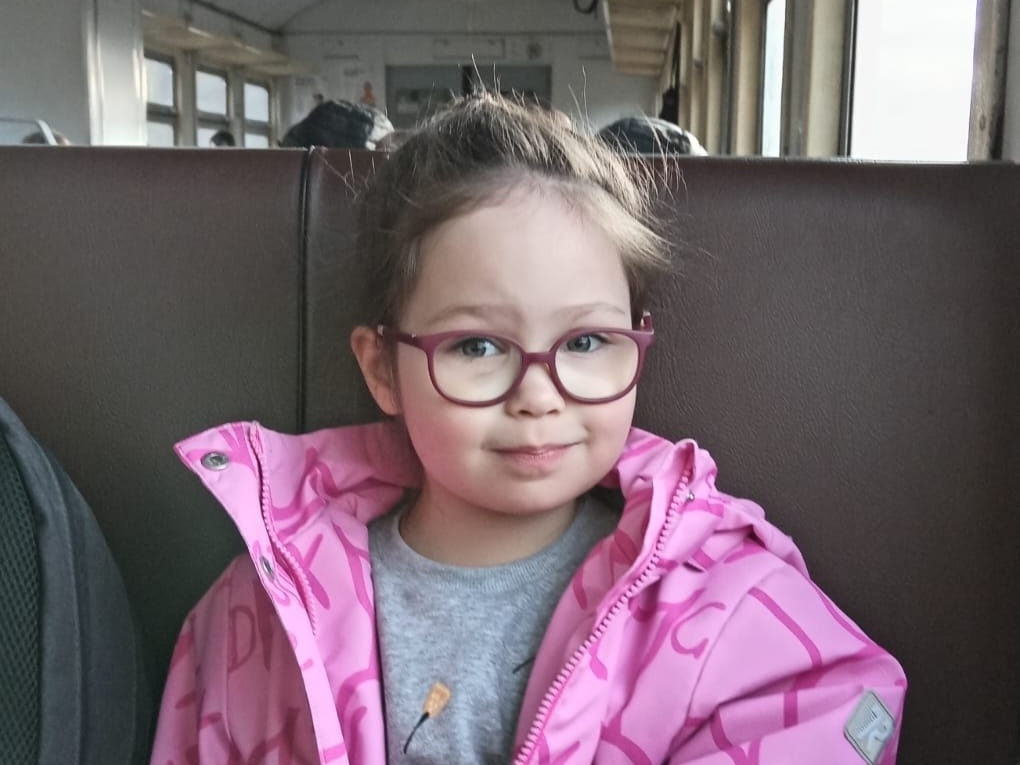
Margarita was a long-awaited daughter. She was born prematurely, at 36 weeks of pregnancy, and spent three weeks in the neonatal pathology department for examination. Rita was diagnosed with tuberous sclerosis. Preventive medication was immediately prescribed to prevent the onset of epileptic seizures, as her epileptic activity rate reached 70%.
EEG monitoring was required every month during her first year of life, and every two months during her second and third years. Margarita's development was very slow, and she only began walking and talking after she turned two.
Rita is now four years old. She attends kindergarten and works with a speech therapist and a psychologist. She has delayed motor and speech development. Drawing and writing are very difficult due to weak muscles and a slight tremor. Rita loves walking, swinging, singing, dancing, reading books, and reciting poetry. Currently, EEG monitoring is required every 3-4 months. This is to monitor the dynamics of epileptic activity and prevent the onset of seizures, which, in turn, would lead to developmental delays and the loss of skills and abilities that Margarita has worked so hard to acquire.
Because Margarita's father is the only one working, her parents are asking for help with the cost of this examination.