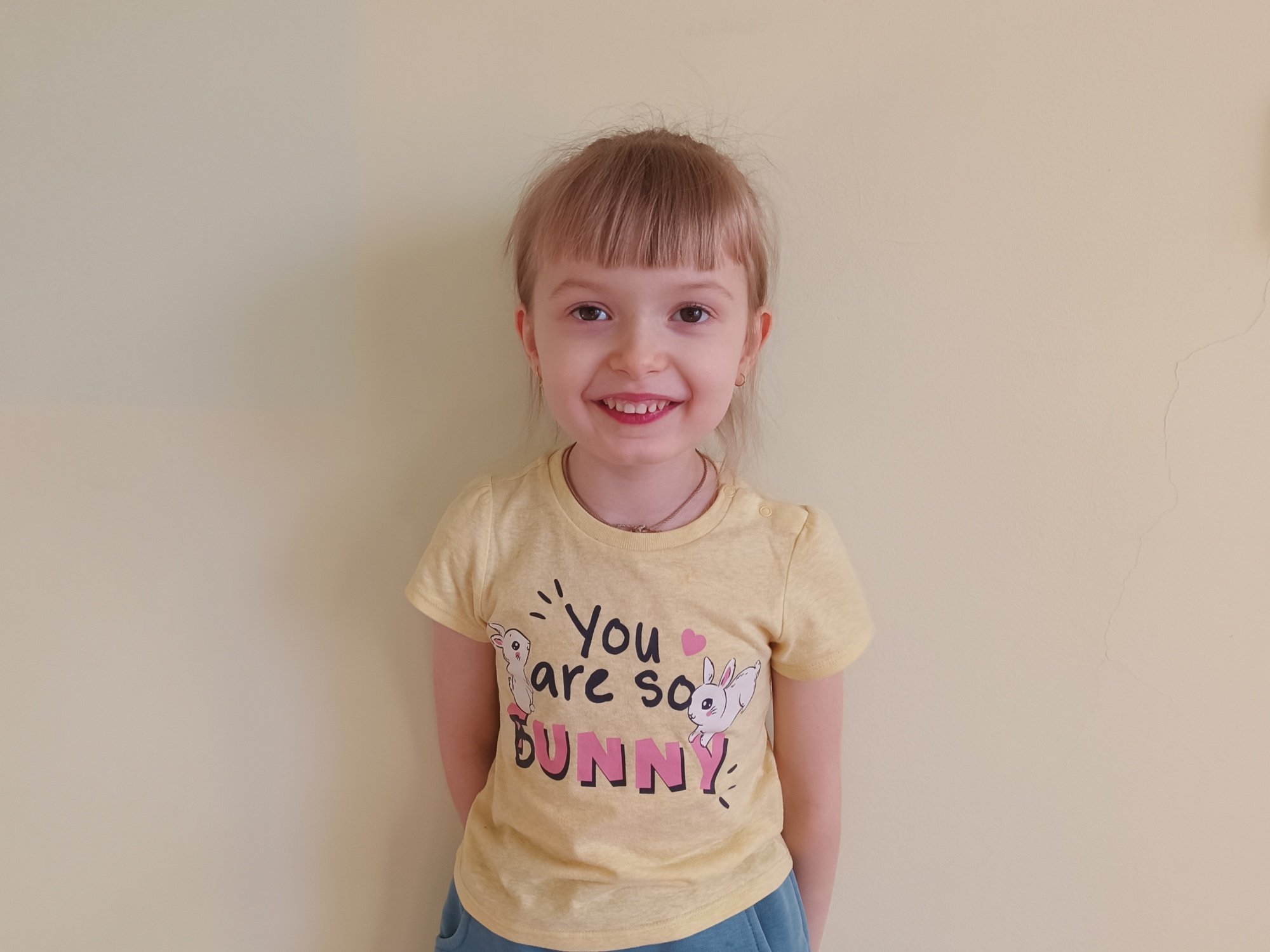
Lera was an only and long-awaited child. Born prematurely and underweight, she developed more slowly: she was later able to sit, crawl, and talk. At age three, she was registered as disabled due to developmental delay, and the family's life became a constant cycle of classes and rehabilitation.
At age three and a half, however, subtle warning signs emerged: an examination revealed epileptic activity in her brain, and later, strange, sharp head nodding. For almost two years, doctors dismissed these as "tics" and treated them, but the treatments were ineffective. At age five and a half, a video EEG monitoring session diagnosed her with epilepsy.
Each mini-seizure hinders Lera's development, interfering with her brain's ability to learn and process information. To find the right, effective treatment that will stop the seizures and give Lera a chance to catch up, the cause of her epilepsy must be found.
To do this, a genetic test is necessary to identify the genetic defect that likely caused all the problems.
Lera's parents have already gone through a long journey. They haven't given up and believe in their daughter.